introductions
Thursday8/20 | Class cancelled |
Week 1: what is environmental history and how do i use it?
Tuesday8/25 | in classPresentation and Discussion – Irrational Landscape: The Great Plains and its towns. before class
|
Thursday8/27 | IN classWorkshop – Reading Wooster During class, barring extreme weather events, we will take a walk downtown from campus. Wear comfortable shoes. It’s about a two-mile walk and will take about an hour. What we are interested in is the layout of the town and why it is arranged this way. Pay attention to the types of built spaces and where they are in relation to built spaces. What history can the space and buildings teach us about Wooster the town and Wooster the college?and check these maps out of our route from the 1890s: One Two |


Week 2: wilderness and the american mind
Tuesday9/1 | in classPresentation/Discussion – American Wilderness and Sublime Landscapes Before Class |
Thursday9/3 | in classWorkshop – Wilderness as an Academic Enterprise Before ClassRead and Take Notes on the following articles from the first ever issue of Environmental History Cronon, “The Trouble with Wilderness”Hays, “The Trouble with Bill Cronon’s Wilderness”Cohen, “Resistance to Wilderness”Dunlap, “But What Did You Go Out into the Wilderness to See?”Cronon, “Response” Quiz – Quiz – One paragraph on the meaning and definition of a “sublime landscape” as the subject of a painting and how it applies to Moran’s piece. Other questions drawn from essays. |
.jpg)
Week 3: Understanding environmental history part one
Tuesday9/8 | in classPresentation/Discussion: Understanding Environmental History – A Midterm Study Session Before ClassRead: Fiege, The Republic of Nature, pages ix-99 Read: Jacobs, “The Great Bophuthatswana Donkey Massacre” (You will be asked to write your essay on one aspect of this article.) |
Thursday9/10 | in classMidterm One. Before ClassReview Lecture/Discussion/Presentation Notes. Review notes from workshops. Read and review the articles and chapters assigned so far. |
Week 4: Case Study – the great plains: 1541-1931
Tuesday9/15 | in classPresentation/Discussion: Settler Colonialism: Race, Space, and Nature on the Great Plains 1541-1876 Before ClassResearch and write Read: Fiege, The Republic of Nature, 100-228 |
Thursday9/17 | in classPresentation/Discussion: The Agricultural Wonderland Quiz:Write a two-paragraph description of settler colonialism. One paragraph on what it means and a second on how it helps us understand the past. |
Week 5: Case study – Ruin: The Great plains 1931-1941
Tuesday9/22 | No class |
Thursday9/24 | No classCheck out the paintings of Alexandre Houge, the Dust Bowl Ballads of Woody Guthrie, and the photographs of Dorothea Lange and Arthur Rothstein. Write one-paragraph notes on each of these subjects. |
|
|
Week 6: case study: understanding the dust bowl
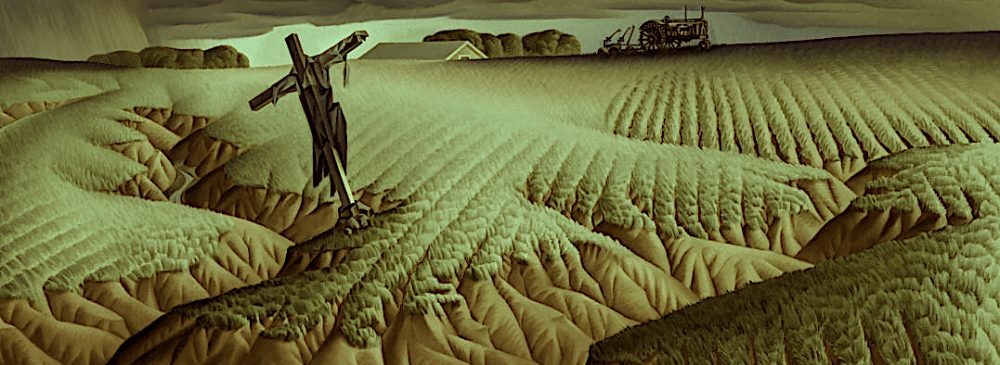
Tuesday9/29 | in classPresentation/Workshop: The Art of the Dust Bowl: Film, Photography, Painting, and Music. Alexandre Hogue’s “Drouth Survivors”: The Ten-Minute Research Paper Before Class |
Thursday10/1 | in classWorkshop: Building the Five-Paragraph Research Paper Before ClassReview all your notes on New Deal Art. |
| Sunday10/4 | Research Paper Due: 5:00 p.m.Send a pdf of your paper directly to my email. NOT A LINK – but the actual attachment. title your document with your last name first and then the words dust bowl paper. Like this – bairddustbowlpaper. NOT dustbowlpaperbaird, or dustbowlpaper or historypaper. |
Week 7: Conservation and PReservation and knowledge
Tuesday10/13 | in classPresentation/Discussion: National Parks, National Forests, and the Rise of Industrial Capitalism Before Class |
Thursday10/15 | in classDiscussion: Kimmerer, Braiding Sweetgrass Before ClassRead: Kimmerer, Braiding Shortgrass |
Week 8: The birth of the Environmental Movement
Tuesday10/20 | in classPresentation: The Birth of the Environmental Movement Before Class |
Thursday10/22 | NO Class |
Week 9: Case Study: The 1964 Wilderness Protection Act
Tuesday10/27 | in classDiscussion/Workshop: What to do with the Wilderness Act? Before ClassCollect ten documents on the 1964 Wilderness Act Write one paragraph description and summary of the 1964 Wilderness Act |
Thursday10/29 | in classMidterm TwoBefore ClassReview: All readings (including the rest of Braiding Sweetgrass), media, lectures, discussion, workshops from Dust Bowl through Wilderness Act. |
Week 10: Understanding Environmental Racism
Tuesday-Thursday11/3-11/5 | in classWorkshop: Understanding Environmental Racism Before ClassRead: Ten Examples of Environmental Racism Read: Fiege, Republic of Nature, 281-402 Read: Environmental Justice in Postwar America, Part One: The Nature of Segregation Read/Watch: Examining the Effects of Environmental Inequity in Houston – Landfills Take Notes! |
|
| |
|
|
Week 11: Understanding Environmental Racism
Tuesday – Thursday11/10-11/12 | in classWorkshop: Understanding Environmental Racism Before ClassRead: Environmental Justice in Postwar America, Part Two “A More Inclusive Environmentalism Watch: Majora Carter, “Greening the Ghetto” Take Notes! |
Week 12 : Poster presentations
Tuesday-Thursday
11/17-11/19
Week 13: research
Tuesday
11/24 Research Workshop
Week 14: research PResentations
Tuesday – Thursday
12/1-12/3